Map the crawl graph
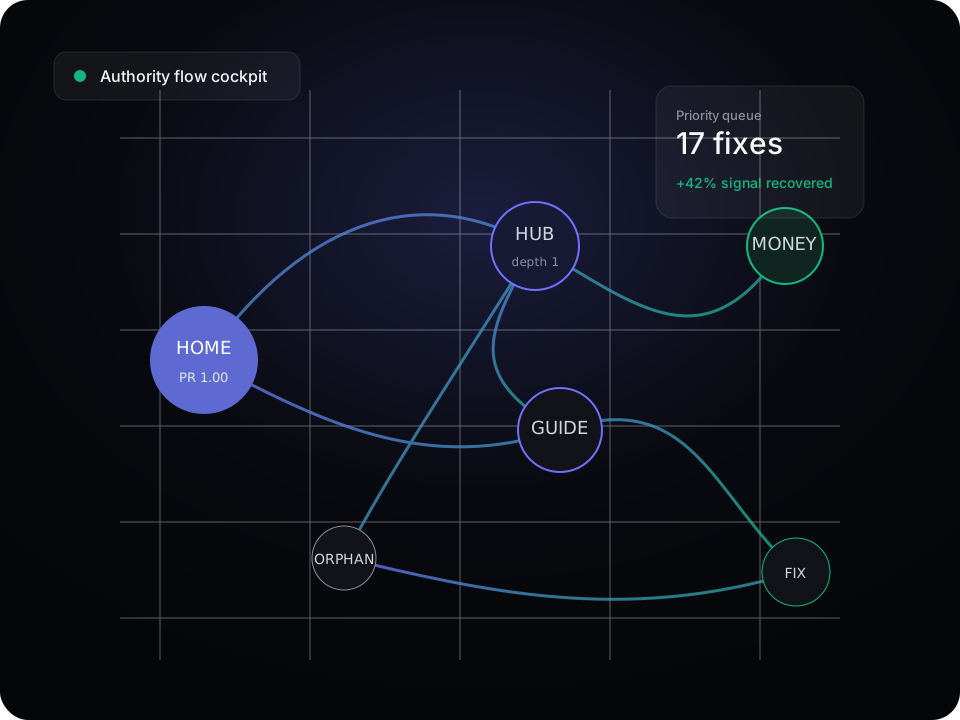
Segment URLs by depth, template, indexability, and link neighborhoods so navigation gravity is visible before recommendations are made.
Independent search authority field guide
A tactical SEO concept for finding hidden ranking opportunities, mapping internal links, and turning page authority signals into focused content actions.
Why it matters
High-value pages sit too deep, supporting pages never pass authority, and teams optimize isolated URLs without seeing the graph. pagerank.ninja frames technical SEO as an authority-flow discipline: trace how signal moves, then act where the graph is weakest.
Authority-flow framework
Use this as a resource-first operating model for technical SEO audits, content refreshes, and internal-link strategy.
Segment URLs by depth, template, indexability, and link neighborhoods so navigation gravity is visible before recommendations are made.
Flag orphan pages, dead-end hubs, diluted pagination, nofollow traps, and over-linked utility pages that absorb more signal than they return.
Connect ranking opportunity with feasible internal-link moves: hub creation, anchor updates, canonical cleanup, and crawl-path compression.
Diagnostic playbook
Built for people who think in systems
Audit narratives that move from crawl data to board-ready priorities.
A sharp brand for internal-link services, diagnostics, and retainers.
Prioritization language for large content libraries and product-led pages.
A concise name for ranking intelligence, graph analysis, or link-equity tooling.
FAQ
No. pagerank.ninja is an independent concept and is not affiliated with, endorsed by, or connected to Google. It does not claim access to proprietary Google ranking systems.
No. The current page is a static concept and resource for authority-flow thinking. It avoids fake metrics or claims that cannot be verified.
Strong fits include technical SEO education, internal-link audit software, ranking-intelligence dashboards, content-prioritization workflows, or an agency-owned methodology hub.